
From accounting periods starting on or after 1 January 2027, UK-listed companies will report against the UK Sustainability Reporting Standards (UK SRS) on a comply-or-explain basis, with first reports landing in 2028. That is the headline from the FCA's final rules in Policy Statement PS26/19, and it was the focus of the FCA webinar on 19 October 2026, Aligning listed issuers' sustainability disclosures with international standards.
If you prepare climate or sustainability disclosures for a listed company, this is the biggest change to UK climate reporting since TCFD-aligned rules arrived in 2020.
Here is what you need to know:
- UK SRS replaces TCFD for listed companies, for accounting periods starting on or after 1 January 2027.
- Everything is comply-or-explain. UK SRS S2 (climate), Scope 3 emissions and UK SRS S1 (other sustainability matters) all sit on the same basis. The FCA dropped its earlier plan to make S2 mandatory.
- International companies are in. Secondary-listed companies and depositary receipt issuers must also report against UK SRS on a comply-or-explain basis.
- Transition plans and assurance are about transparency. You disclose whether you have a transition plan and whether you obtained assurance but you are not required to have either.
- Transitional reliefs still apply under FCA rules: 1 year for Scope 3 and 2 years for non-climate S1 disclosures ("climate-first" reporting).
Background: from COP26 to UK endorsement
The UK SRS are the UK government endorsed version of the ISSB's first two international sustainability standards: IFRS S1 General Requirements for Disclosure of Sustainability-related Financial Information and IFRS S2 Climate-related Disclosures. In the UK they become UK SRS S1 and UK SRS S2.
The ISSB: born at COP26 in Glasgow
The International Sustainability Standards Board (ISSB) was announced by the IFRS Foundation at COP26 in Glasgow in November 2021. Its goal was to establish a global baseline of sustainability standards that enabled entities to disclose information that is decision-useful and financially material for investors.
The ISSB did not start from scratch. It consolidated the Climate Disclosure Standards Board (CDSB) and the Value Reporting Foundation (VRF), which housed the SASB Standards and the Integrated Reporting Framework. It also built directly on the TCFD recommendations.

IFRS S1 and IFRS S2: published June 2023
After consultation in 2022, the ISSB published IFRS S1 and IFRS S2 in June 2023, effective internationally for annual periods beginning on or after 1 January 2024. Later in 2023 the TCFD disbanded, handing responsibility for monitoring climate disclosures to the ISSB.
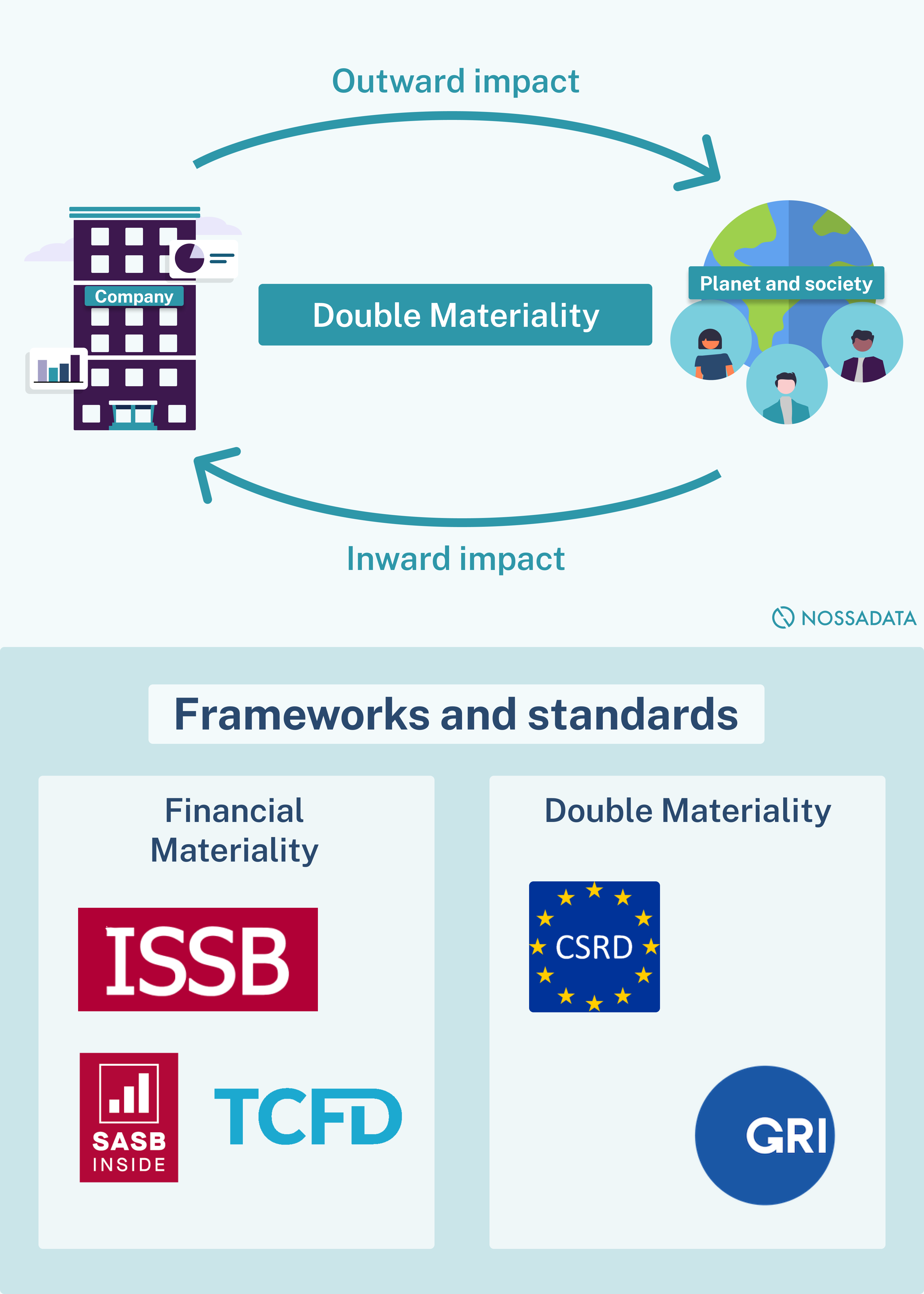
The key concept in both standards is financial materiality. Companies disclose sustainability-related risks and opportunities that could reasonably be expected to affect their cash flows, access to finance or cost of capital over the short, medium or long term. As the FCA stressed in the webinar, the UK SRS is focused exclusively on financially material information for investors, lenders and other creditors.
- IFRS S1 is the overarching framework; it sets out the objective, conceptual foundations, core content and general requirements for all sustainability-related financial disclosures.
- IFRS S2 applies that framework to climate; it covers physical and transition risks, scenario analysis, Scope 1, 2 and 3 greenhouse gas emissions, climate-related targets and transition plans.
UK SRS timeline: key dates for UK climate reporting
The UK SRS went from exposure draft to final FCA rules in about 15 months. Here are the milestones that matter for listed company reporting.

UK SRS vs IFRS S1 and S2: what the UK changed
The UK SRS makes only minor amendments to the ISSB standards, which keeps UK reporting globally comparable.
The changes worth knowing:
- Effective date and application are set by UK law, not the ISSB. The UK SRS do not carry their own mandatory effective date. Whether and when a company must apply them depends on FCA rules (for listed companies) or the Companies Act (for others).
- No fixed time limits on transition reliefs. IFRS S1 and S2 tie the climate-first relief and the Scope 3 relief to a company's first year of reporting. The UK SRS removed these specific-time references so early voluntary adopters are not penalised. Voluntary reporters can therefore use the reliefs with no time limit. Where reporting is required, the regulator sets the relief periods (see the FCA rules below).
- Reporting aligned to the financial year. Sustainability disclosures cover the same reporting period as the company's financial statements.
- GICS requirement removed. UK SRS S2 removes the requirement to use the Global Industry Classification Standard (GICS) when disaggregating financed emissions, giving financial institutions more flexibility in how they classify counterparties.
- SASB Standards are voluntary. Under IFRS S1, companies must refer to and consider the SASB Standards when identifying sustainability-related risks and opportunities. Under UK SRS S1, referring to SASB is optional.
The reliefs for comparative information and for continuing to use an alternative greenhouse gas measurement method for one year (instead of the GHG Protocol), are retained in the final UK SRS.
The FCA's final UK SRS rules (PS26/19)
The FCA's final rules put UK SRS S1, UK SRS S2 and Scope 3 emissions on a single comply-or-explain basis. The FCA's stated aims are a regime that is proportionate, simpler, focused on high-quality financially material information, and more transparent for investors.
Why UK SRS S2 is not mandatory
In its February 2026 consultation (CP26/5), the FCA proposed making UK SRS S2 mandatory, with comply-or-explain only for Scope 3 and S1. Consultation feedback changed that.
Respondents warned that a mandatory approach would place a disproportionate burden on smaller companies whose business models are not greatly affected by sustainability matters, and that their disclosures are often of limited use to investors. Some also found the mix of mandatory and comply-or-explain elements hard to follow.
The FCA considered size thresholds but rejected them. Its reasoning: climate exposure depends on business model and sector, not size. A small energy or transport company can be highly exposed to climate risk.
In the Q&A, the FCA was clear that comply-or-explain is not the same as voluntary. It also confirmed it has no longer-term plan to make reporting mandatory.
What “comply” and “explain” mean
Comply means the company has prepared its disclosures in accordance with all UK SRS requirements and makes an explicit and unreserved statement of compliance.
Explain means the company has not disclosed fully against the standard. Its explanation in the annual financial report must:
- Summarise the requirements not met. For S2, that is the disclosure requirements. For S1, the sustainability-related risks and opportunities not disclosed.
- Give the reasons why.
- Set out any steps the company is taking, or plans to take, to make the disclosures in future.
The draft Technical Note TN 803.1 says explanations can be short and proportionate, but must be clear, concise, cogent and specific to the company. The FCA gives the example of a company that cannot disclose Scope 3 because a change in third-party data providers has left gaps. You do not need an explanation for every paragraph you miss; listing the headings or paragraphs not met can be enough. If a company has identified no sustainability-related risks or opportunities under S1, one sentence saying so is sufficient.
A company that explains against any part of a standard cannot make a statement of compliance with that standard.
Disclose-or-explain for transition plans
The FCA does not require companies to have a climate transition plan but companies must state in their annual report whether they have one and where it can be found. Or, companies must explain why they do not yet have a transition plan.
In the webinar, the FCA made clear that mandating transition plans is a matter for the UK Government, which has consulted separately. Using the IFRS educational material on transition plans is optional, and the Transition Plan Taskforce framework remains an option.
Transparency on sustainability assurance
There is no mandatory assurance. But if you have obtained third-party assurance, you must disclose the provider, which disclosures were assured, the level (limited or reasonable), the assurance standards used, and where the report can be found. You do not have to explain if you have no assurance. The FCA will keep mandatory assurance under review, taking account of the FRC's voluntary register of sustainability assurance providers.
Who is in scope of the UK SRS rules?
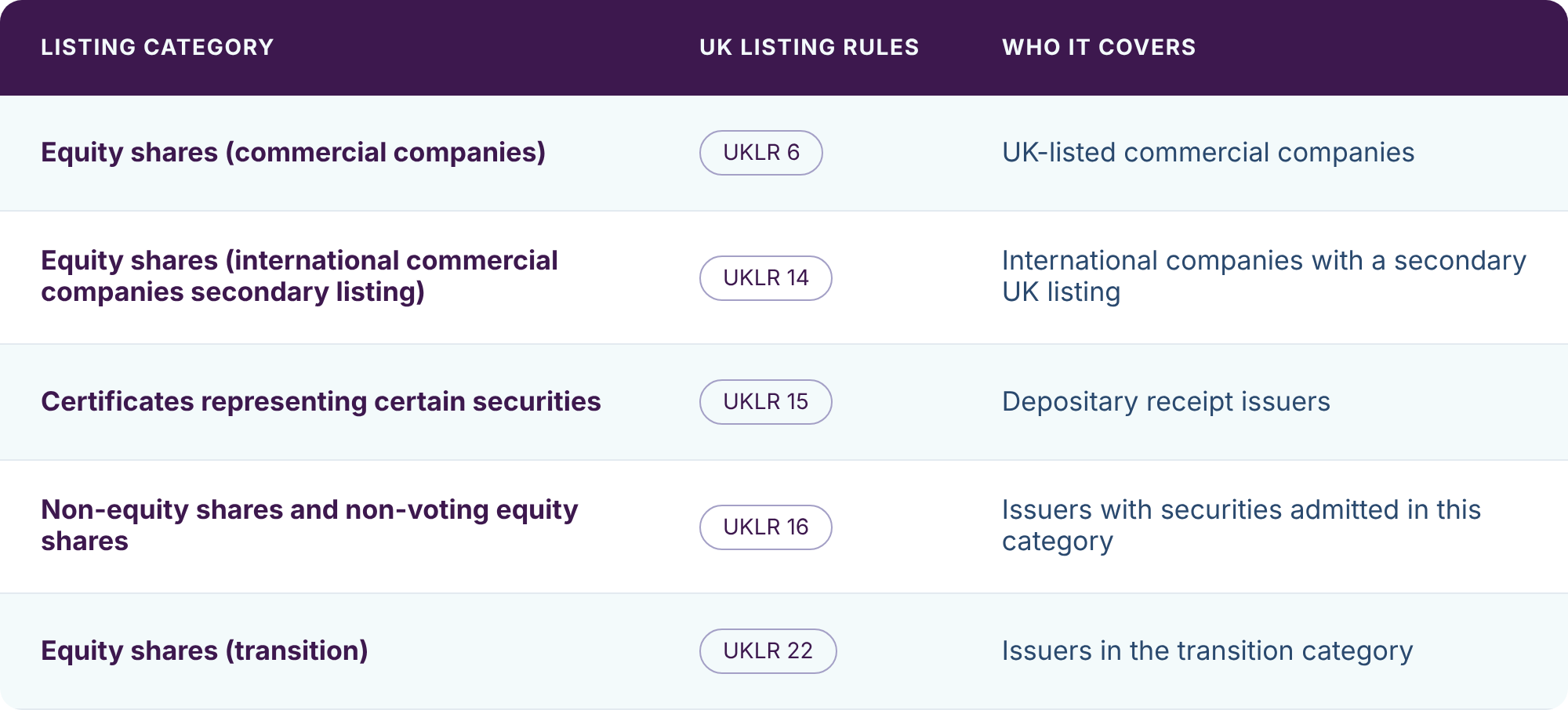
The scope is the same as the current TCFD-aligned rules. It is set by listing category under the UK Listing Rules (UKLR), not by company size or whether the company is incorporated in the UK.
What sustainability reporting teams should do now
If your financial year runs January to December, your FY2027 annual report is the first one under UK SRS. That means data collection, controls and governance need to be in place during 2027, not in early 2028.
My suggestions:
- Run a gap analysis against UK SRS S2 and S1. Start from your current TCFD disclosures. The FCA's 2023 thematic review found over 90% of companies reported consistently with TCFD Governance and Risk Management, but fewer did so on Strategy and Metrics and Targets. Scenario analysis, anticipated financial effects and industry-based metrics are where most teams will find gaps.
- Decide where you will comply and where you will explain. Be honest about data readiness, especially for Scope 3. A well-reasoned, company-specific explanation is better than a weak disclosure.
- Plan your use of the reliefs. Decide whether you will use the 1-year Scope 3 relief and the 2-year climate-first relief. Remember to state their use in the annual report. If you already report Scope 3, nothing stops you continuing.
- Start your S1 materiality assessment now. The climate-first relief buys time, but identifying financially material sustainability risks and opportunities beyond climate takes a full cycle. SASB is optional under UK SRS, but it is still a useful starting point.
- Prepare your transition plan statement. Confirm whether you have a published transition plan and where it lives, or draft your explanation.
- Map your assurance position. If you obtain voluntary assurance, record the provider, scope, level and standard (for example ISSA (UK) 5000) so the disclosure is ready.
- Respond to the Technical Note consultation. TN 803.1 is open until 28 October 2026. It includes illustrative compliance statements and explanations, so it is worth reading even if you do not respond.
UK SRS FAQs
When does the UK SRS apply to listed companies? For accounting periods starting on or after 1 January 2027, with first reports published in 2028. TCFD-aligned rules apply until then.
Is UK SRS reporting mandatory? No. For listed companies it is comply-or-explain across UK SRS S1, UK SRS S2 and Scope 3. The FCA stressed that this is not the same as voluntary: if you do not comply, you must explain. It also said it has no plan to move to mandatory reporting.
We already report under TCFD. Can we just keep doing that and explain? TCFD rules fall away for periods starting on or after 1 January 2027, so your explanation would be measured against UK SRS. Because UK SRS S2 builds on TCFD, moving across is usually the more efficient route, and investors will expect it.
Do the transition reliefs still matter if reporting is comply-or-explain? Yes. While a relief applies, you only state that you are using it. You do not need to explain the missing Scope 3 or non-climate S1 disclosures.
Does the UK SRS replace SECR? Not under these rules. Streamlined Energy and Carbon Reporting (SECR) sits in the Companies Act 2006. The FCA's draft Technical Note says the UK Listing Rules requirements operate separately from Companies Act obligations.
Do we have to disclose commercially sensitive information? UK SRS S1 includes a limited exemption for commercially sensitive information about sustainability-related opportunities. It does not extend to risks.
Do we need assurance over our UK SRS disclosures? No. You only need to disclose details of any assurance you have obtained.
Sources
- FCA, PS26/19 Aligning listed issuers' sustainability disclosures with international standards, September 2026
- FCA, draft Technical Note TN 803.1 UK SRS sustainability disclosures for listed companies (consultation closes 28 October 2026)
- FCA webinar slides, UK SRS for listed companies: PS26/19 and TN 803.1, 19 October 2026
- UK Sustainability Reporting Standards guidance and documents, GOV.UK
- IFRS Sustainability Knowledge Hub, IFRS Foundation