


ESG 101
Do You Need Reasonable Assurance for Sustainability Data?
As sustainability reporting moves from a voluntary to a regulated, audited discipline, one question companies may ask is: do you actually need reasonab
For this article I will consider the ESRS E1 Disclosure of 6 companies from the CDP’s Corporate A List. What does good sustainability disclosure look like? That is a hard question as there are not many objective measures of good / versus bad practice. When considering E1, Climate Change specifically I thought it would be helpful to consider the scores from one of the most detailed climate change assessments on the market. The CDP.
The CDP A-list: The Carbon Disclosure Project (CDP) is a global non-profit that operates the world’s leading independent environmental disclosure system, facilitating transparency and accountability on environmental impacts for companies and other organisations. In the 2025 reporting cycle, over 22,100 companies disclosed environmental information through CDP, with nearly 20,000 of those being scored and 877 achieving Corporate A List status — indicating top-tier performance in environmental disclosure.
This assessment will look into x6 companies who have achieved the CDP A-List in 2025 and specifically consider their disclosure around Climate Change under ESRS.
Some key findings from the review:
Iberdrola
Country: Spain
Industry: Energy / Utilities – Electric & Gas
Market Cap: ~$159.8 B USD (Feb 2026)
Description: Iberdrola S.A. is a major electricity and gas utility that develops, generates, transmits, and distributes power, with a growing focus on renewable energy such as wind, solar, and hydro. The company operates globally, supplying electricity to millions of customers across Europe, the U.S., and Latin America.
CDP Score: CDP CC: A, CDP W: B
Iberdrola 2025 Sustainability Statement.
BASF SE
Country: Germany
Industry: Chemicals / Materials
Market Cap: ~€42.82 B (~$46 B USD) (Feb 2026)
Description: BASF SE is one of the world’s largest chemical producers, manufacturing a broad range of chemicals, plastics, performance products, agricultural solutions, and advanced materials used across industrial and consumer sectors. The company serves industries from automotive and construction to electronics and agriculture with integrated chemical solutions.
CDP Score: CDP CC: A, CDP W: A-, CDP F: A
Deutsche Telekom
Country: Germany
Industry: Telecommunications / Telecom Services
Market Cap: ~€153 B (~$165 B USD) (Feb 2026)
Description: Deutsche Telekom AG is a leading European telecommunications company providing fixed-line and mobile services, broadband internet, and ICT solutions for consumers and businesses. It operates major networks in Germany and across Europe and holds a significant stake in T-Mobile US.
CDP Score: CDP CC: A
Deutsche Telekom E1 Statement 2025.
Philips N.V.
Country: Netherlands
Industry: Health Technology / Medical Devices
Market Cap: ~€22 B (~$26.9 B USD) as of early 2026
Description: Koninklijke Philips N.V. is a global health technology company focused on improving health outcomes through diagnostic imaging, patient monitoring, and connected care solutions, as well as personal health products like oral care. Philips operates internationally with major business segments in diagnosis & treatment, connected care, and personal health technology.
CDP Score: CDP CC: A, CDP W: A
Philips NV 2025 Annual Report.
Carlsberg A/S
Country: Denmark
Industry: Beverages – Brewing
Market Cap: ~129.9 B DKK (~$17–20 B USD) (Feb 2026)
Description: Carlsberg A/S is a major brewing company best known for its flagship Carlsberg and Tuborg beer brands, producing, marketing, and selling beer and soft drinks worldwide. The company operates breweries and distribution networks across Europe and Asia and engages in licensed production in additional markets.
CDP Score: CDP CC: A, CDP W: A-
Nilfisk
Country: Denmark
Industry: Industrial & Commercial Cleaning Equipment
Market Cap: ~3.8 B USD (2026 estimate)
Description: Nilfisk Holding A/S supplies professional and consumer cleaning equipment, including industrial vacuum cleaners, scrubbers, sweepers, and high-pressure cleaning systems. Headquartered in Copenhagen, Nilfisk serves a wide range of sectors including commercial, industrial, and residential markets through global sales and dealer networks.
CDP Score: CDP A
Not surprising given the CDP A list status, all companies communicate about an SBTi aligned target which we highlight below:
Iberdrola: SBTi aligned target around Emission intensity in electricity generation and Net Zero in Scopes 1, 2 and 3 by 2040.
BASF: In addition, we support various national and international initiatives and are involved in partnerships. For example, we engaged in close dialog with the Science Based Targets initiative (SBTi), which has derived science-based climate protection targets for the chemical sector.
Deutsche Telekom: In 2024 their SBTi was confirmed under the stricter guidance of the Paris Agreement.
Philips: Nilfisk has been committed to the UN Global Compact since 2010 and has held approved Science-Based Targets (SBTi) for scope 1, 2, and 3 emissions since January 2022.
Carlsberg: Communicated they are awaiting final validation of their SBTi-aligned targets after recent acquisitions. They said it will be reassessed in 2026.
Nilfisk: In 2025, we achieved a significant milestone with the approval of our Net-Zero climate targets by the Science Based Targets initiative (SBTi). Nilfisk has been committed to the UN Global Compact since 2010 and has held approved Science-Based Targets (SBTi) for scope 1, 2, and 3 emissions since January 2022.
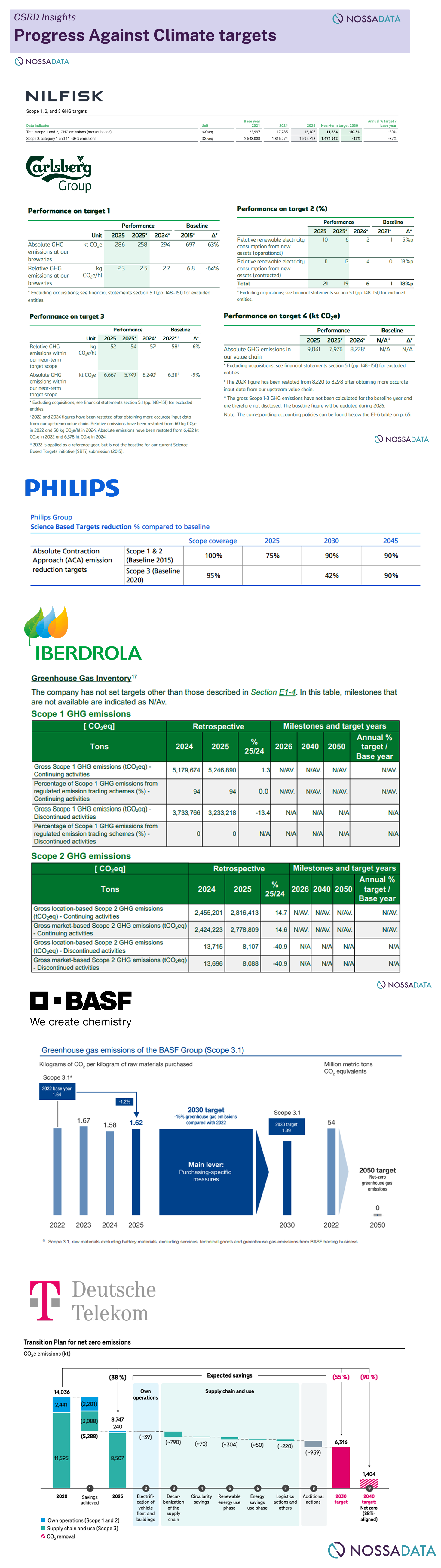
Next we looked at these companies metrics tables. Most of the companies lableled their metrics tables with ESRS codes e.g. E1-5, E1-6 etc. When reviewing many ESRS reports it is really helpful as a reader to be triggered to their respective ESRS. We saw a mix of choices in regards to historic reporting with some companies publishing data back for x5 years and others only doing the x2 years of ESRS. Multiple comments commented about re-stated / re-calculated data.
Finally, we consider each report individual in terms of their E1 disclosure and what we saw unique about them.
Iberdrola opens their E1 category by linking to GOV-3 of the ESRS. We don’t always see this within CSRD reports but it is helpful. You can clearly and quickly understand that their remuneration structure considers climate targets.
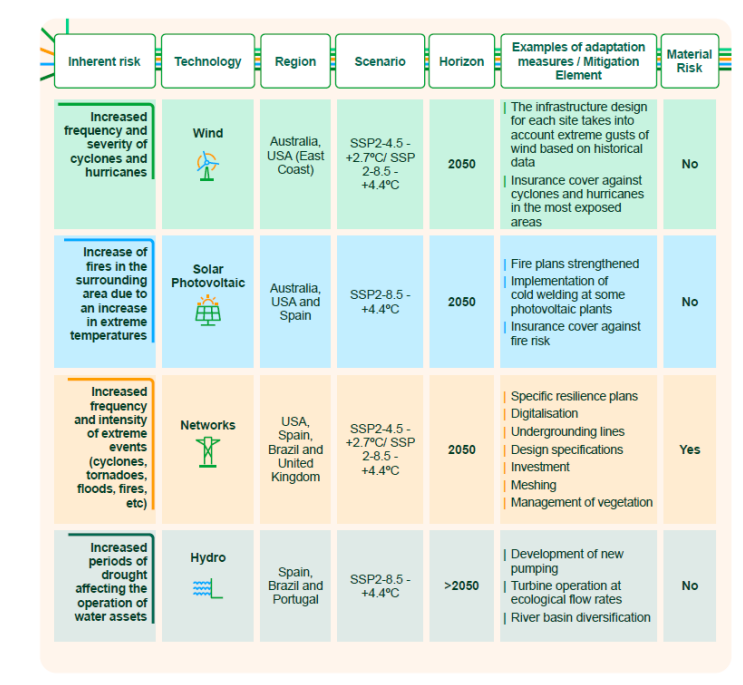
They offer various illustrations highlighting the risks they face such as the below which shows their Inherent risks. One area to improve is that this image seems to be a screenshot which means that for data scrapers to gather this data they would require the use of OCR which less companies have.
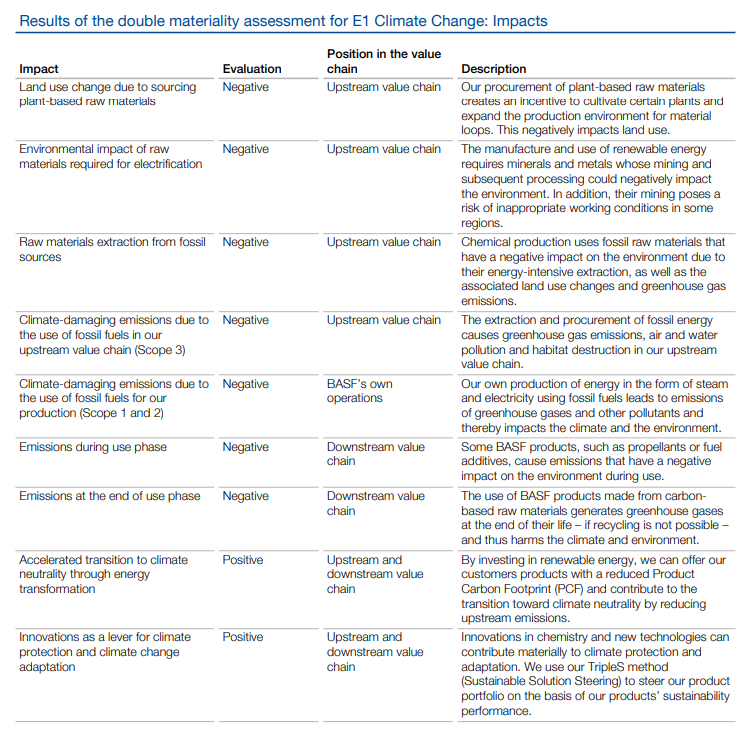
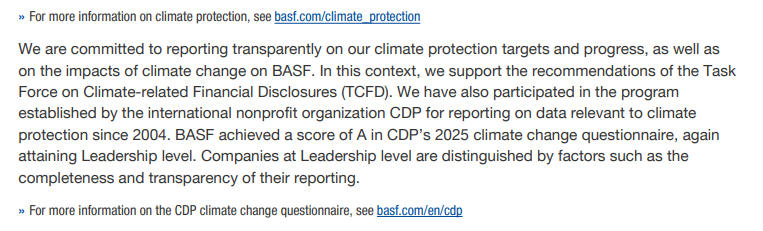
BASF makes it very easy to see which IROs identified in their materiality assessments are to climate change. As a reader I can easily see their 11 identified Climate Change IROs.
Furthermore, they make effective use of ESRS codes within their narratives showing them below each sub-section title.
Within BASF disclosure they help you understand other website locations you can look at for additional details on specific sub-topics such as Climate Protection or their CDP response.
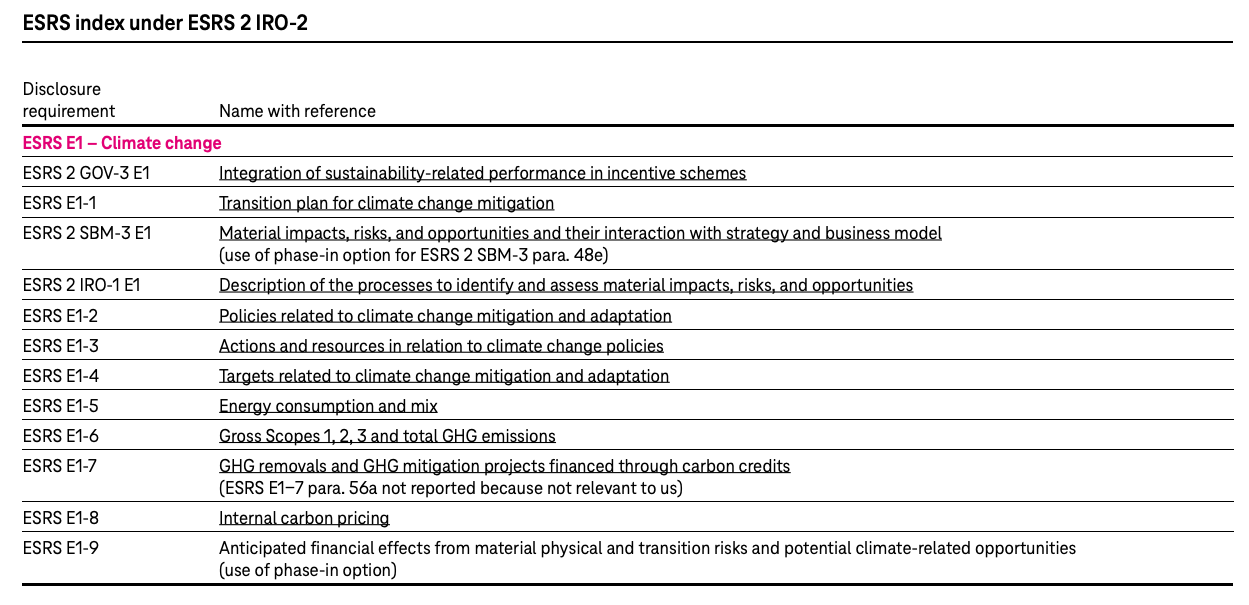
Deutsche Telekom opens their ESRS disclosure with a table that shows all the ESRS E1 topics they will disclose against as material with a hyperlink to where that can be found within their disclosure. See example below:
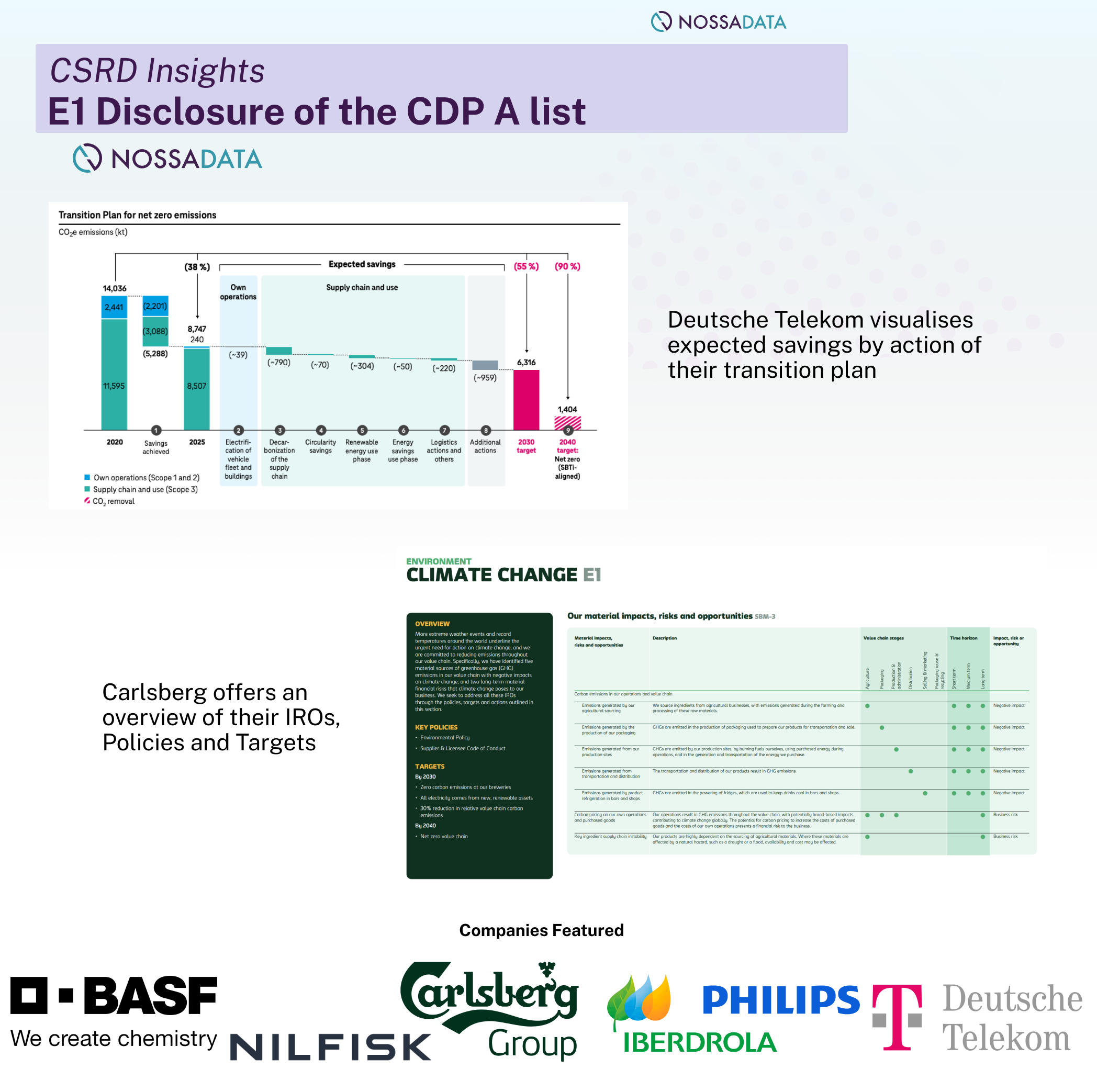
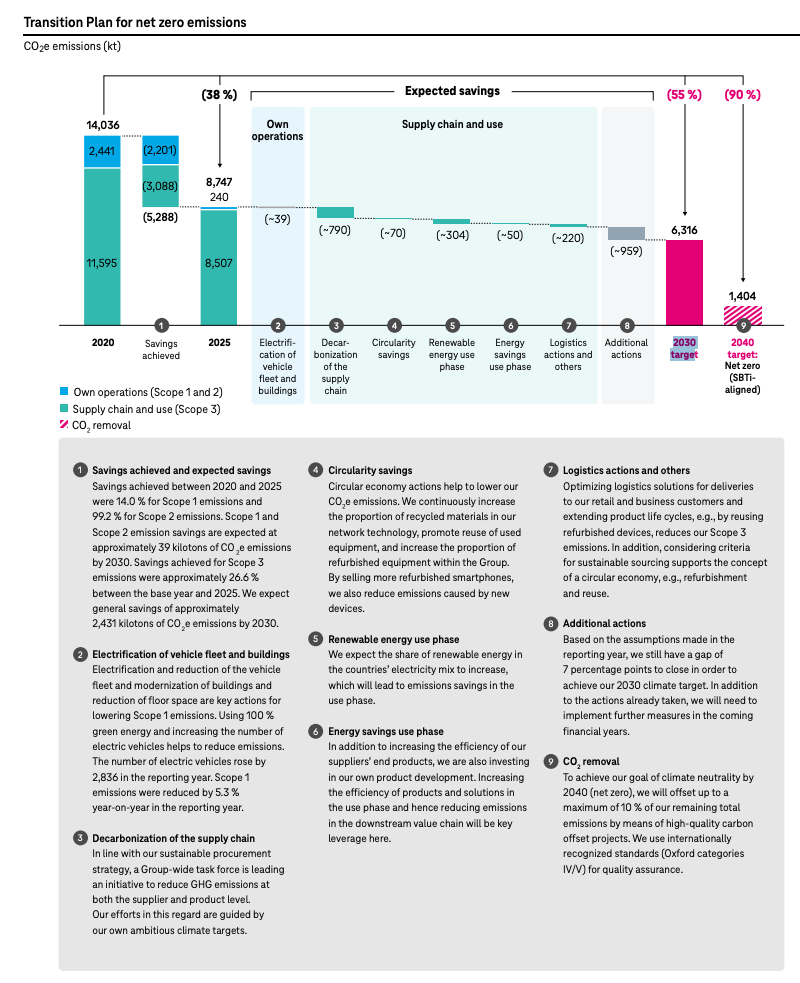
In regards to their transition plan, they also show an overview image to make it very clear the various actions they intend to take and the relevative impact. Unlike other reports this also is not a screenshot but is a dynamic image in their report making it easier for AI to pick up this content.
In addition to their transition plan illustrative image, under ESRS E1-4 they offer a clean list of all of their Group-wide targets so it is very easy to see what they are working towards.
On page 130 they list:
Philips opens their E1 section by re-affirming that Climate Change has been an important topic to them well before their first Double Materiality Assessment. They also make it clear immediately that it is tied to Senior Management remuneration.
They also offer an image that shows the timeline and actions around the Climate Transition Plan.
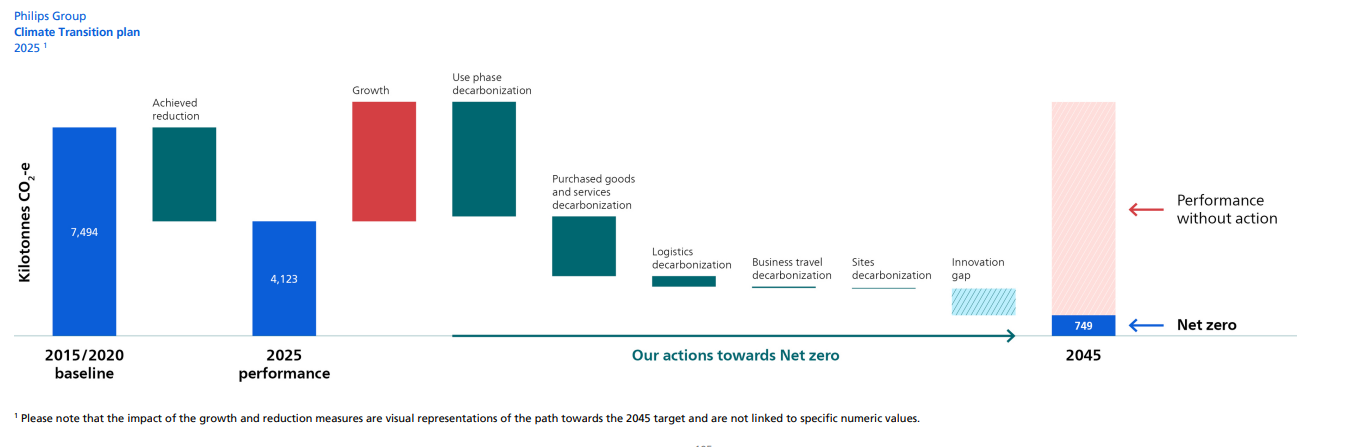
Throughout the section they reference their Climate Resilience Report which gives additional guidelines in terms of actions and results. That report is available here.
Carlsberg opens E1 with an overview page showing Policies, Targets and their IROs via a single image. This image is not a screenshot but has live selectable text.
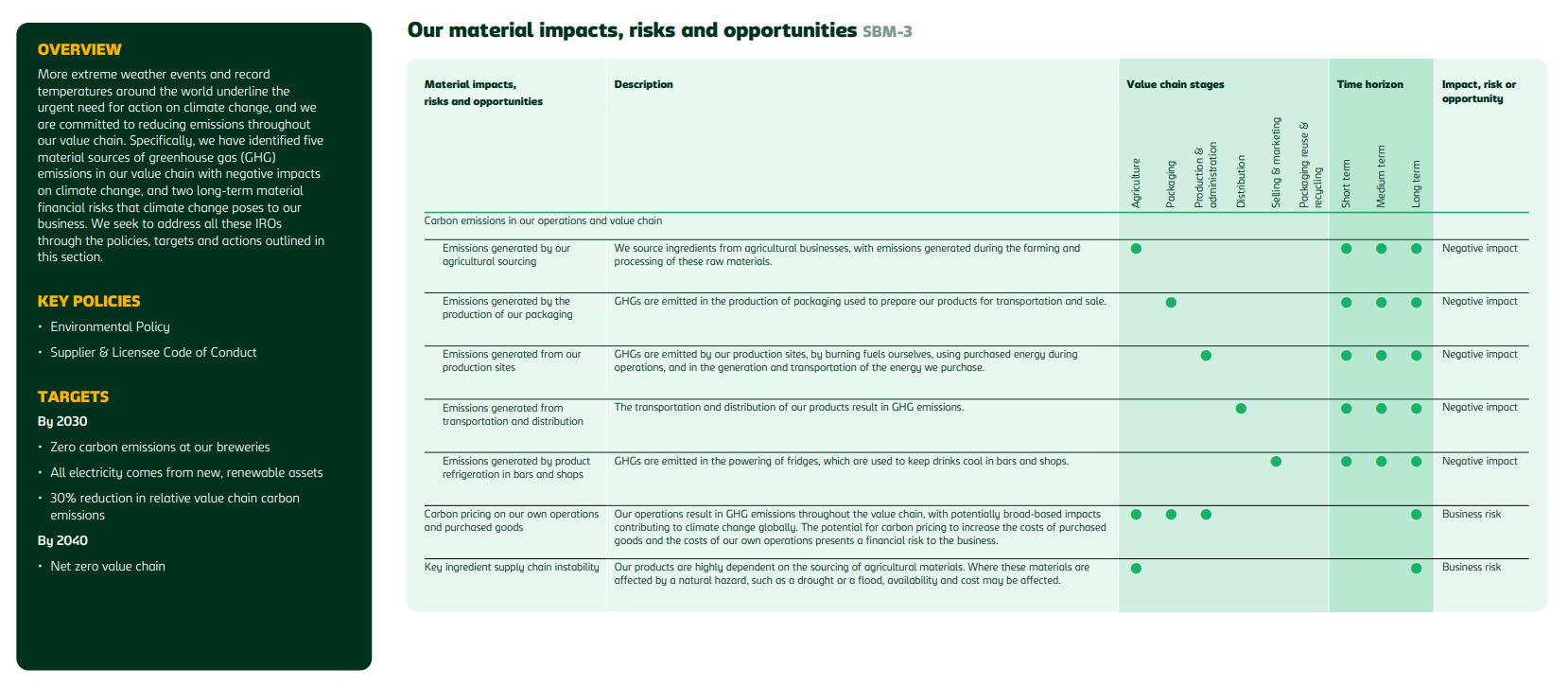
They open their E1 disclosure by offering a communication of high level work on Climate Change from their transition plan, policies to their targets and action. They then tackle each target one by one.
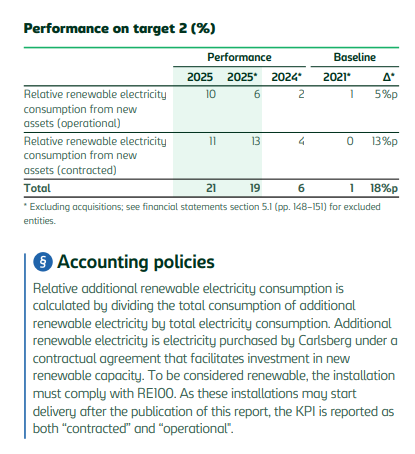
Instead of communicating about their accounting policies at the end at the bottom of each metric they offer narrative on the accounting policy considered.
After communicating about their overall Net Zero Value chain target they offer narrative on expected challenges they could be facing. This is on page 63 of their report.
“The implementation of the emissions reduction actions mentioned above may pose various challenges, including material availability and added procurement costs. Additionally, the availability of infrastructure, including energy grid connections and charging infrastructure for EVs in our operating markets, may also delay our actions. Converting fossil fuel-based thermal energy to renewables or electricity is also expensive and technologically challenging, both for our own operations and our entire supply chain. The growing complexity and variation in product offerings also presents an emissions reduction challenge, as benefits of economy-of-scale production are minimised. Challenges and risks are considered in roadmap planning, allowing us to prioritise cost-efficient solutions that can drive the agenda to reach our targets.”
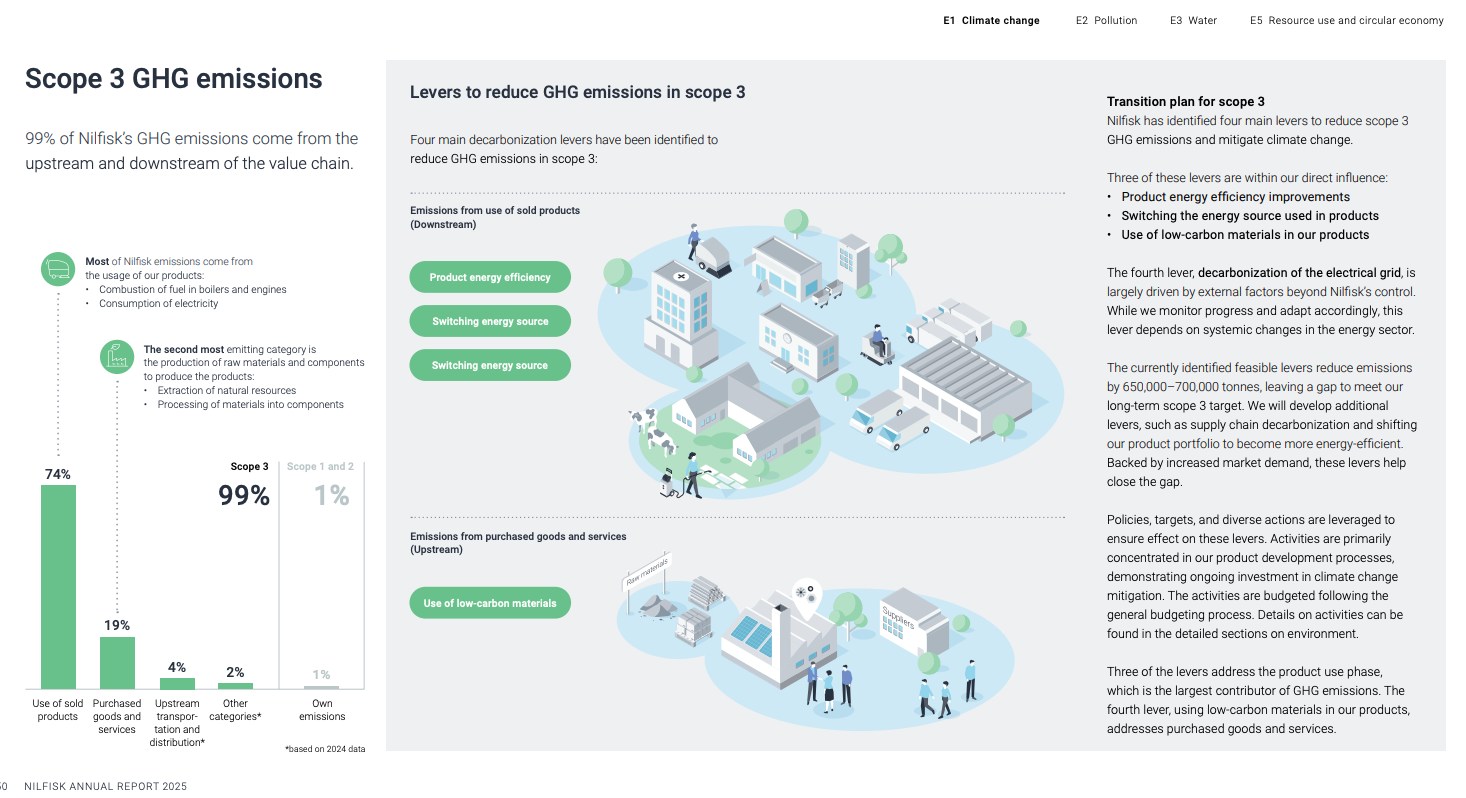
Nilfisk offers images teaching about their efforts but separate it from Scope 1 and 2 and Scope 3. As 99% of Nilfisk’s emissions are Scope 3, they first focus on their Scope 3 efforts. View the image below:
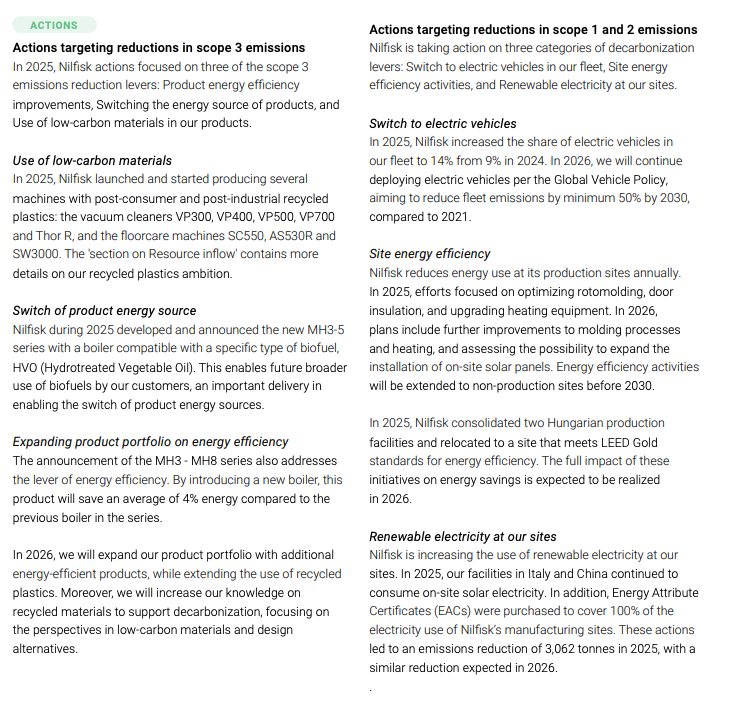
Similarly, by their material IROs they separate actions from Scope 3 and Scope 1 and 2 and make it easy to see what exactly is being done. See below their actions under Climate change mitigation and energy.
Similar to Carlsberg, Accounting Policies are communicated next to their metrics.