


ESG 101
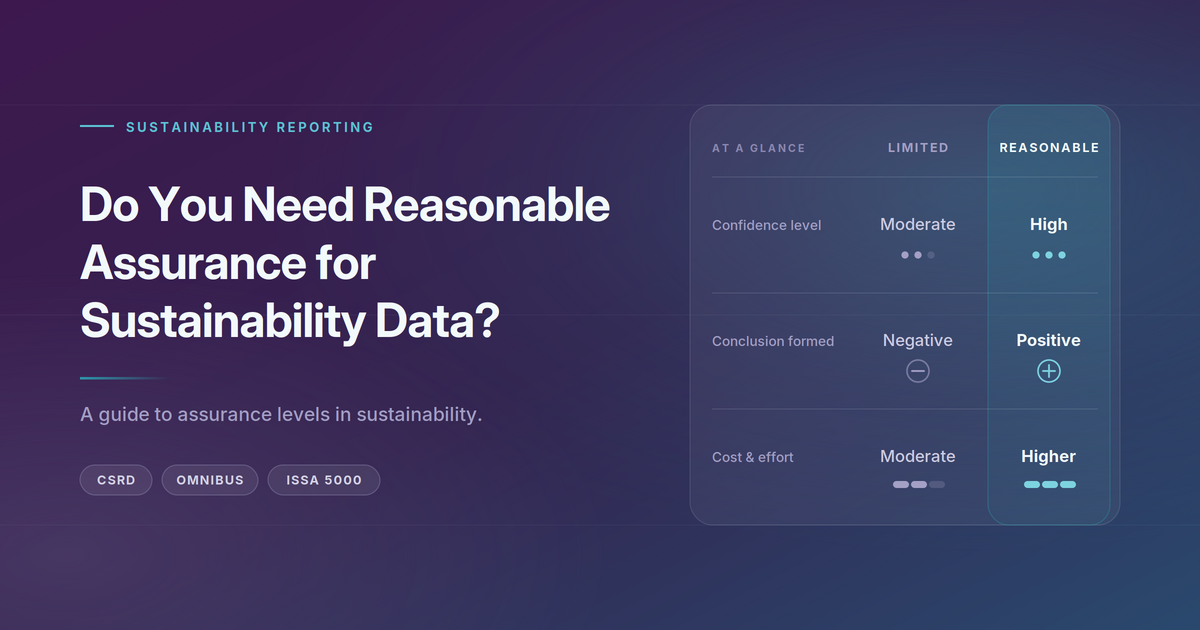
Do You Need Reasonable Assurance for Sustainability Data?
As sustainability reporting moves from a voluntary to a regulated, audited discipline, one question companies may ask is: do you actually need reasonab
What Are Science Based Targets?
Science Based Targets (SBTs) are greenhouse gas emissions reduction goals set by companies in line with the latest climate science — specifically the level of decarbonisation required to keep global warming well below 2°C, and ideally to 1.5°C, above pre-industrial levels. They are validated and badged by the Science Based Targets initiative(SBTi), a partnership between CDP, the United Nations Global Compact, the World Resources Institute (WRI) and WWF.
Unlike voluntary pledges, an SBT must meet rigorous scientific criteria before approval — giving investors, customers, and regulators confidence that it is credible.
The two levels of ambition
• Near-term targets cover the next 5–10 years and require significant, measurable emissions cuts now.
• Long-term / Net-zero targets set a pathway to net-zero across the value chain, typically by 2050 orearlier.
97% of all validated targets are aligned to 1.5°C — the most ambitious threshold.
What Does It Take to Get a Science Based Target?
Setting an SBT is a structured, multi-step process managed through the SBTi Services platform:
1. Commit — Sign the SBTi commitment letter, giving yourself a 24-month window to submit validated targets.
2. Measure — Conduct a full GHG inventory across Scope 1, 2, and 3, aligned to the GHG Protocol Corporate Standard.
3. Define targets — Set near-term and/or net-zero reduction targets using SBTi’s approved methods.
4. Submit for validation —Submit targets to SBTi Services for independent review against the Corporate Standard.
5. Receive approval — Once validated, your company is listed publicly on the SBTi Target Dashboard.
6. Report annually — Disclose progress each year through CDP or equivalent public reporting.
SMEs can follow a streamlined route with simplified target requirements, making SBTs accessible to organisations of all sizes.
How Many Companies Have a Science Based Target?
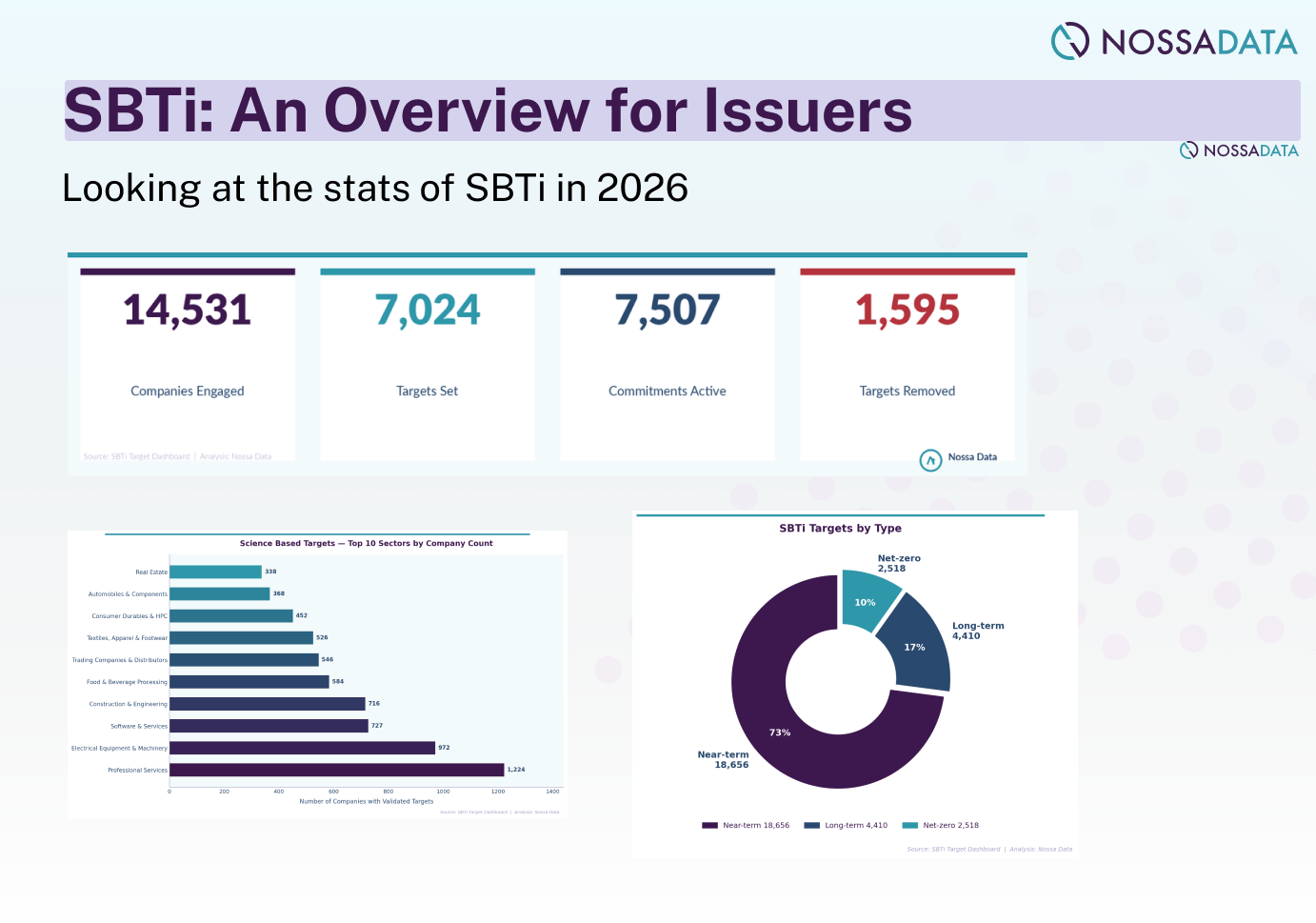
As of April 2026, the SBTi Target Dashboard records 14,531 unique companies engaged with the programme globally.
Of these:
• 7,024 companies have validated targets set and published.
• 7,507 companies have active commitments — signed the pledge and working toward submission.
• 2,516 companies have achieved validated net-zero targets.
• 97% of all target rows are aligned to the 1.5°C pathway.
How Many Companies Have Had a Science Based Target Removed?
1,595 companies have had at least one commitment or target removed from the dashboard — approximately 11% of all engaged companies. The primary reasons:
• Expired commitment (2,294rows) — companies that signed but failed to submit validated targets within the 24-month window.
• Withdrawn commitment (89rows) — companies that actively chose to pull back.
• Target set at parent company level (47 rows) — consolidated under a parent entity.
• Company change (33 rows) —mergers, acquisitions, or restructuring.
Approximately 1 in 10 companies that engage with SBTi ultimately has a target removed. The most common cause is failing to validate targets within 24 months of commitment.
Science Based Targets by Industry
The chart below shows the top 10sectors by number of unique companies with validated targets:
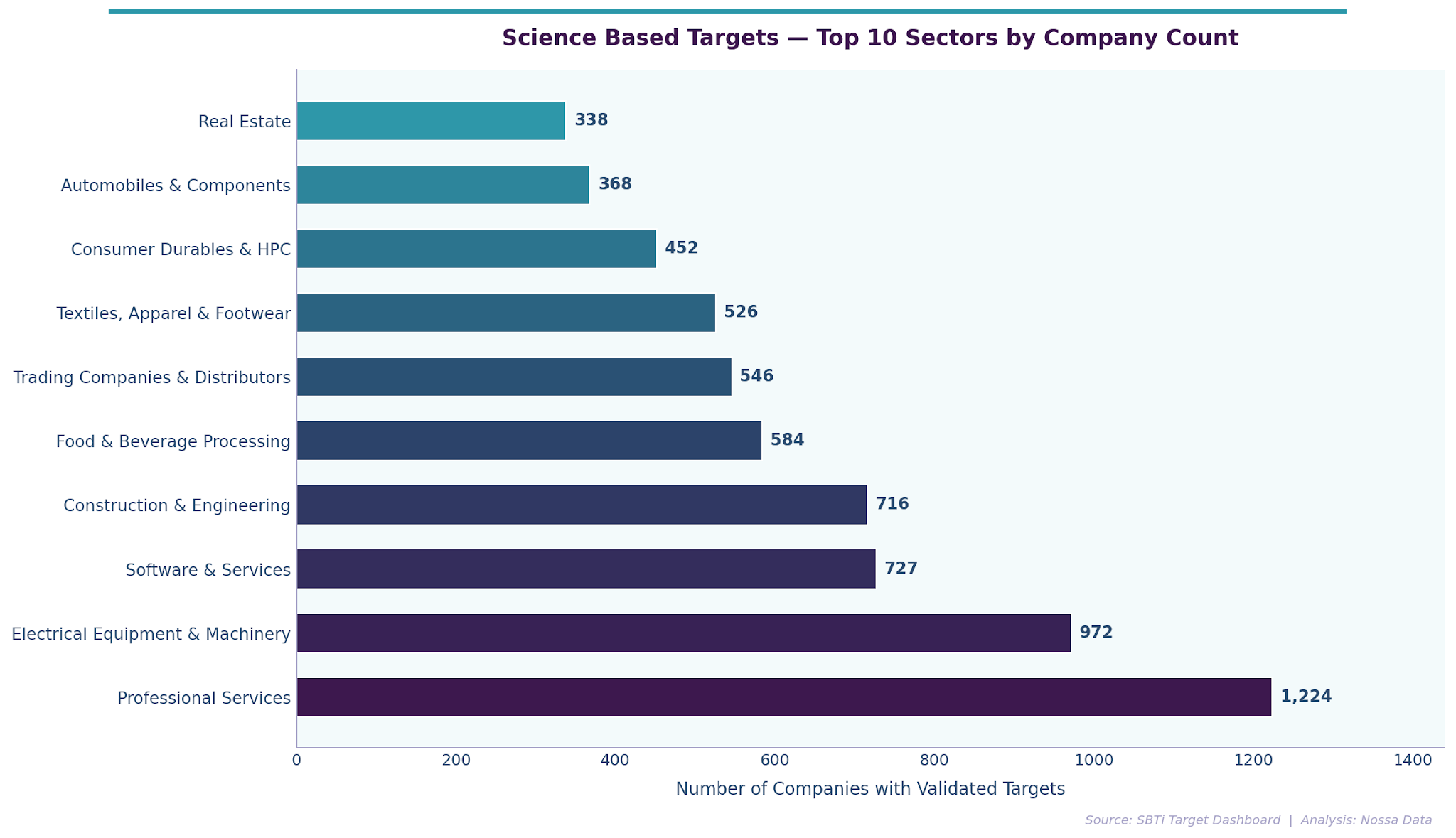
Professional Services leads all sectors with 1,224 companies. Electrical Equipment & Machinery (972) and Software & Services (727) follow closely, driven by regulatory pressure and supply chain demands. Food & Beverage Processing (584) and Textiles, Apparel & Footwear (526) highlight the importance of agricultural and manufacturing value chains to climate action.
Science Based Targets by Country
Japan dominates SBTi participation globally — with 2,351 companies holding validated targets, more than the UK and US combined.
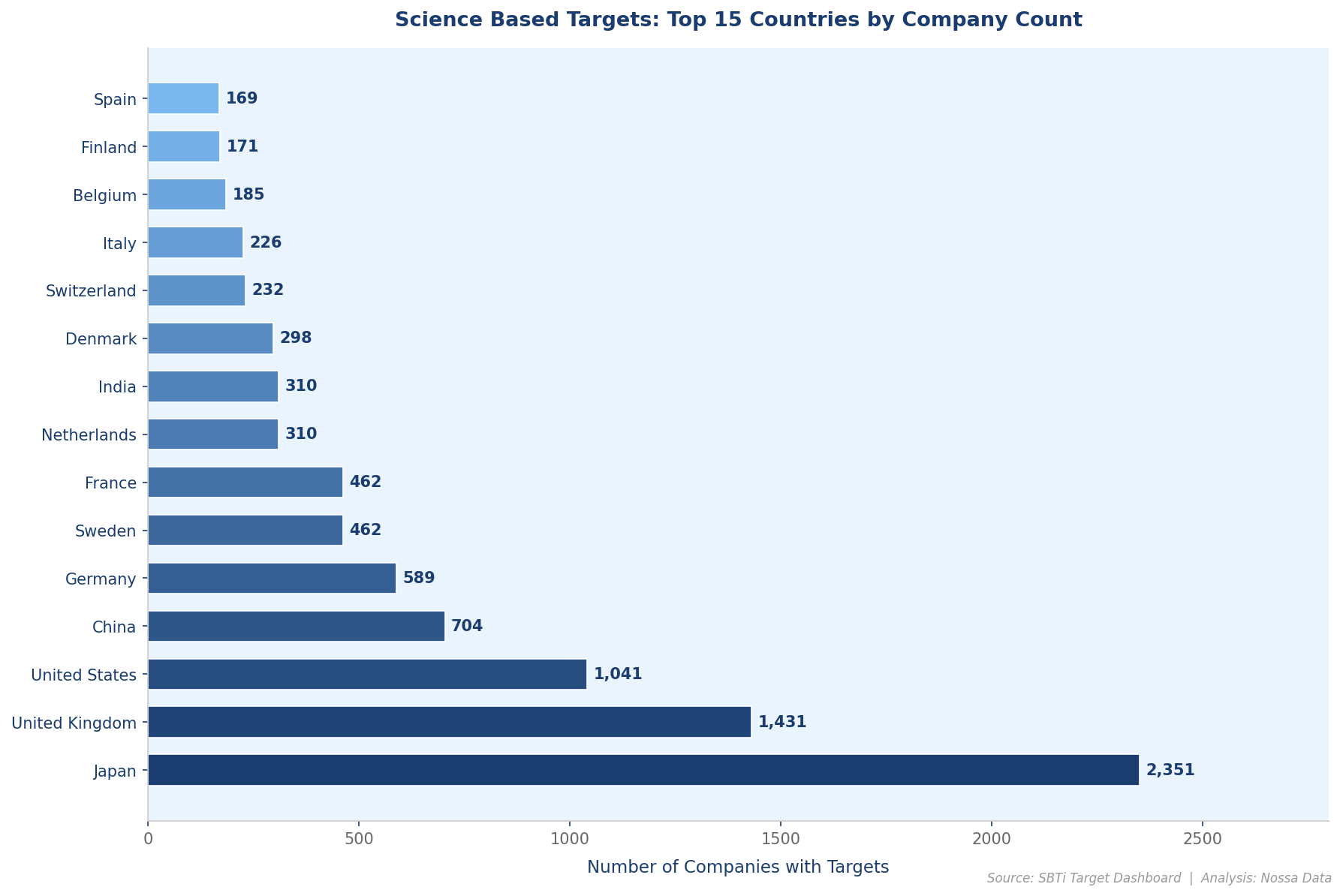
The United Kingdom ranks second (1,431), followed by the United States (1,041). China (704) sits fourth globally — a signal of growing engagement with international sustainability frameworks. India (310) and the Nordic countries punch well above their weight relative to GDP.
Target Type Breakdown: Near-term, Long-term, and Net-zero
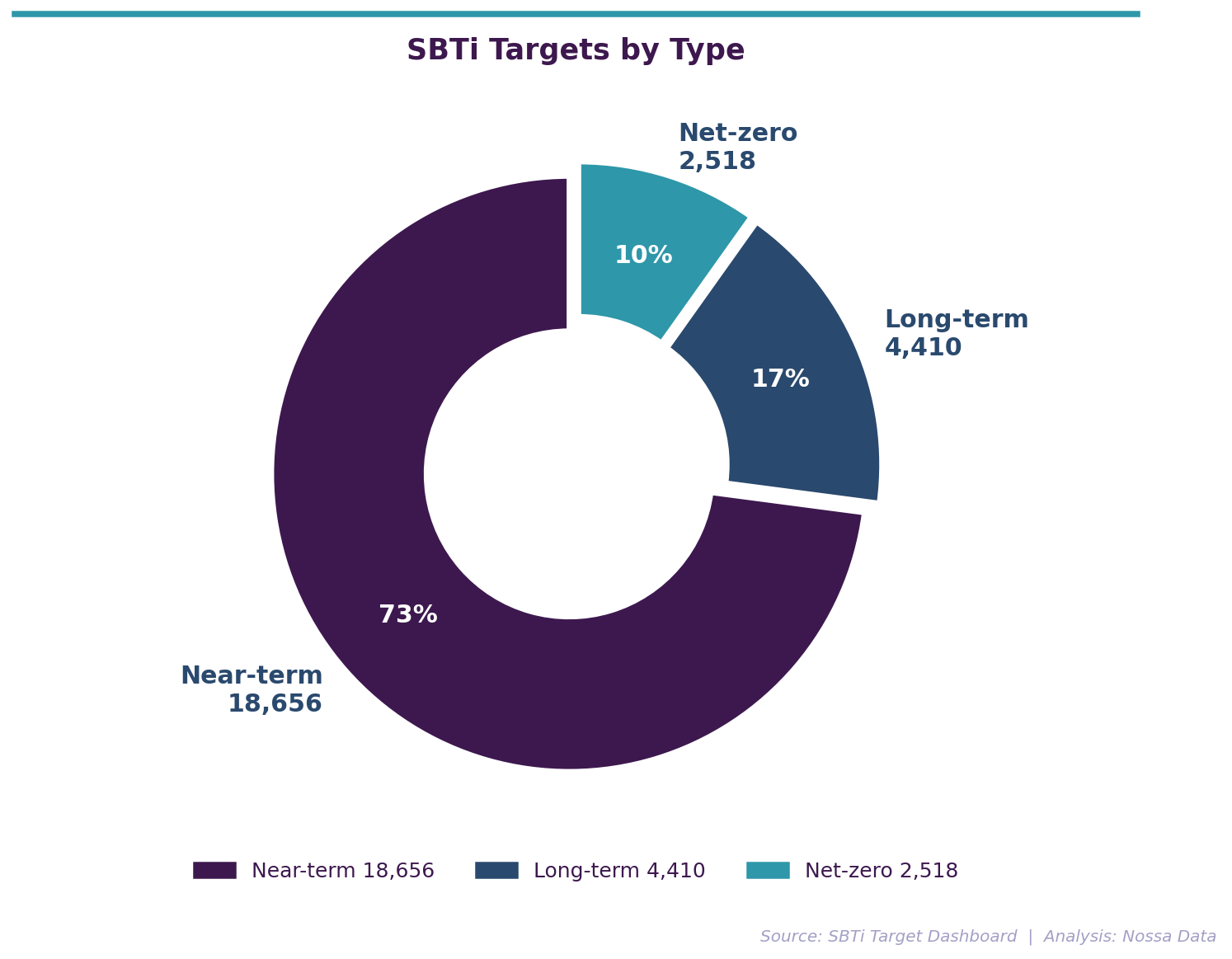
Of the 25,612 target rows in the SBTi dataset: 73% are near-term, 17% long-term, and 10% net-zero. The 2,518 net-zero target rows represent 2,516 unique companies committed to eliminating emissions across their entire value chain.
Interesting in using Nossa Data for your reporting to aligned SBTi Frameworks like CDP:
Get in touch to receive a demo about how we support issuers with their reporting and disclosure to a wide range of ESG Frameworks. Contact us at solutions@nossadata.com or Request a Demo from nossadata.com